CASE STUDY
Innovating the pre–arrival journey
with tourists
BACKGROUND
The organisation is tapping into tourists' pre–arrival journey to collect user data and digitalise the pre–arrival trip–planning experience, particularly geared towards the millennials.
The team wanted to validate and justify the need for such a product to exist, and what are the opportunities that the organisation can dive into.
MY ROLE
UX Designer
RESEARCH TYPE
Exploratory UXR
RESEARCH METHOD
Contextual Inquiry
User Interviews + Audit
METHODS
A look into existing pre–arrival trip planning habits was need. Hence, contextual inquiry was adopted as it allows direct observations of their preferences and practices. Recruitment was conducted via convenience sampling due to budget limitations.
Additionally, past itineraries were examined to identify information that trip–planners find crucial and would typically collect.

"Trip planning is a personal process. Only I know how my plan works."
PUAY, research participant
FINDINGS
Participants preferred their own methods of trip–planning to document information that are important to them.
The complexity of their plan depends on their confidence / familiarity with the destination. The tools that they use are also highly varied.
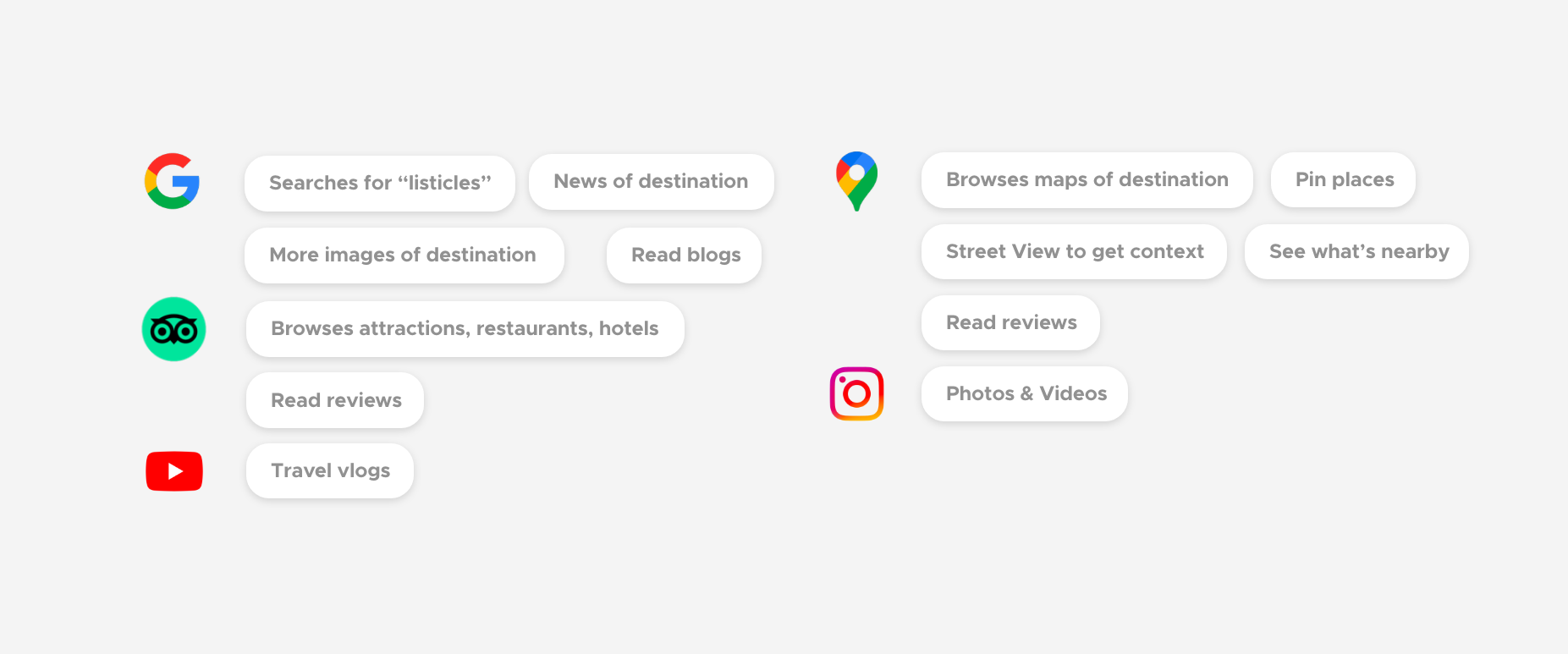
Discovery Phase
- Google is typically their main starting point in the quest to discover new places of interests
- Participants favoured "listicles" which allows them to have a quick "download" of the popular spots not to be missed
- Discovery is highly "visual"; they need to have a sense of the attraction and travel vlogs help satisfy that need
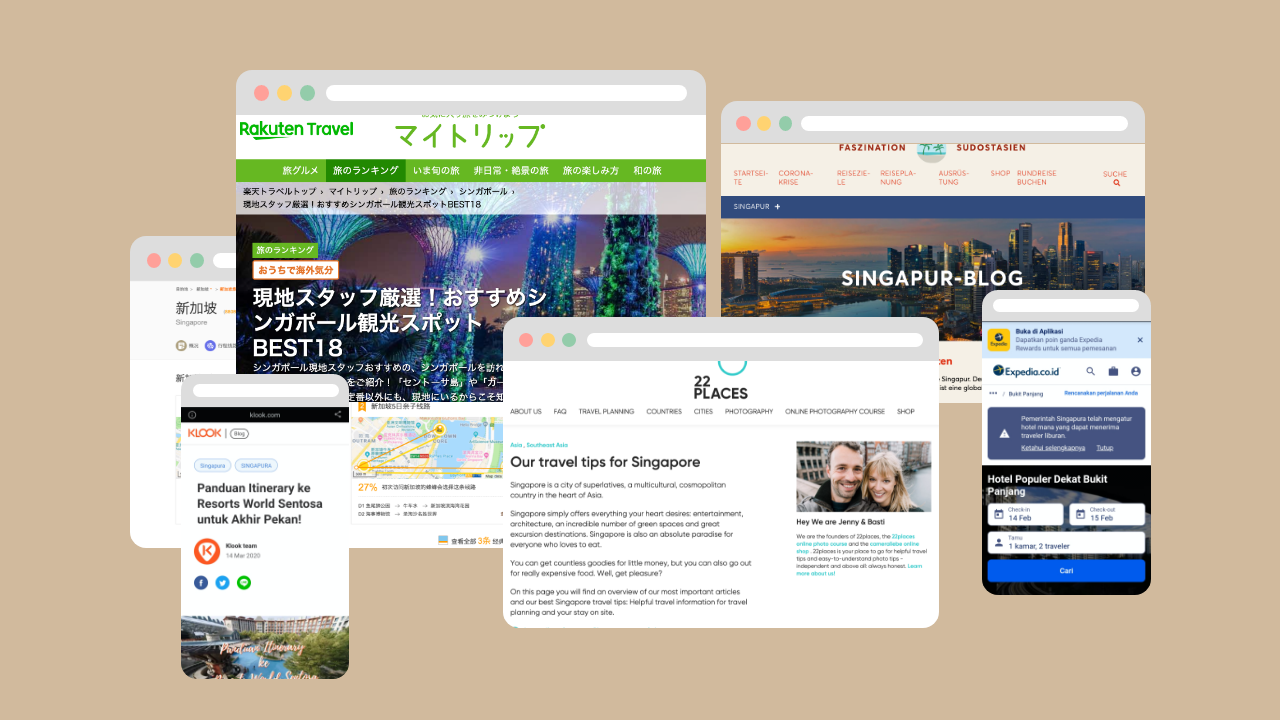
- Daunting to sieve out and organise information useful to them from an expanse of resources on the Internet
Planning Phase
- Participants transfer what they find into productivity tools for further planning, organising or adding of more information
- Different productivity tools adopted by different users — from Excel sheets and list apps like Trello to Google Maps (app) pins or even 'Notes' app on the iPhone
- Lesser planning is needed if familiar with destination, and/or more skilled with travelling
- Participants planned their trips according to proximity, region to region
IMPACT
The findings failed to prove that an itinerary planning product would be useful as there are already existing productivity tools out there that users prefer, and are familiar with.
However, there are opportunities that could be tapped on, particularly during the 'Discovery' phase.
Most participants find organising large chunks of information daunting, and where "most of the work" is during trip–planning.
